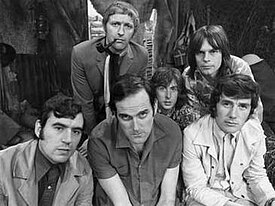
Monty Python's Flying Circus debuted, with little fanfare, on BBC-1 on October 5, 1969, nine days after the Beatles released their final studio album,
Abbey Road. I mention this seemingly irrelevant piece of trivia because it's one of those serendipidous bits of timing that no major cultural sea change can exist without. Much has been made about how the Fab Four's appearance on
The Ed Sullivan Show - the event that rocketed them to stardom in the U.S. and thus set their subsequent world domination in motion - came scant weeks after the assassination of John F. Kennedy, a moment when America (whether it realized it or not) needed a cleansing blast of youthful exuberance. We'll never know if the Beatles would have been the musical and cultural bellwether they turned out to be had things been different - given the talent and the personalities at hand, it's hard to imagine that they wouldn't have made some sort of splash - but it's hard to deny the power of that particular harmonic convergence. So, too, with
Python. No less an authority than George Harrison would later claim that the spiritual energy that was fatally draining from his band at that moment transferred cleanly onto this other, (mostly) British combo, and history has borne him out: comedy underwent a revolution of form and function in the seventies every bit the equal of rock in the sixties, and it was Monty Python who fired the opening salvo. (It's true that the fuse Python lit - if I may mix my revolutionary-weaponry metaphors a bit - was much slower-burning; comedy didn't truly become the new rock 'n' roll until the mid-decade premiere of
Saturday Night Live, a show that provided the same tonic for a country traumatized by Watergate and Vietnam that the Beatles did post-Kennedy, and which owed its comic voice as much to the
National Lampoon and Second City as it did
MPFC. But heavy strands of Python are in its DNA - reruns aired on Canadian television several years before it made it to America, heavily influencing a struggling writer/comedian named Lorne Michaels; several years later, he stood on line for the world premiere of
Monty Python and the Holy Grail, where he would meet the man who would become
SNL's first breakout star [and probably the main reason the show wasn't cancelled after a few weeks], Chevy Chase. Which means that it's only a matter of time before some crazed conspiracy theorist fanboy blames Python for Dan Harmon's ouster from
Community, but let's keep shtum about that.)
More (much, much more) after the jump: